Monday, November 25, 2019

Top 10 Greatest Armies in History

In recorded history, countless successful armies came from the time of mighty Sumerians (4th millennium BC) until the current sole superpower of the World (United States).
Criteria (for being one of the greatest armies) should be established based on an achievements and achievements can be determined in the form of (1) Conquest (How much lands they occupied from the inhabitant part of the region of the earth), (2) Victories (Most importantly decisive victories/victories which were turning point in history worth counted), (3) Durability of their success rate (It can be judged in the form of a timeline), (4) victories against Superpower Empires worth counted (It is a bonus point if they conquered/submitted them successfully), (5) level of influence in conquered societies/territories (6) what type of level of odds they overcame e.g. like tough terrain, harsh weather environment and well-resourced, outnumbered, robust enemies. 
Any army is going to be scrutinized under these patterns with their level of degree.  


Huns in Roman Villa (Gaul)

10) Hunnic Army:
Hunnic hordes roamed across western and eastern Europe from the 4th to 5th centuries and caused great havoc. They relied on their high mobility and a shrewd sense of when to attack and when to withdraw. They often created loud noises during the war to amplify the psychological element of fear into the hearts of their enemies. They contain excellent horsemanship and their archers' fire arrows even if they were back of their horse with great speed. However, they were not entirely good at pitched battles. Christopher Kelly claims that Attila sought to avoid losses “as far as possible, large scale engagements with the Roman army”. An important part of their strategy was to pretend their opponent that they were retreating and then turning back and attacked the disordered enemy units. They have preferred to defeat their enemies by deceit, surprise attack, and cutting off their supplies. Especially under Attila the Hun (known as Scourge of God), Hunnic hordes devastated most of Europe and taken tens of thousands of lives. However, their hordes were not entirely powerful enough to conquer the capitals of both the eastern and western Roman Empire. Their conquest was short-lived with barren results. 


Phalanxes formation

9) Macedonian army:
The army of Macedon was among the greatest military forces of the ancient world. It was created under the guidance of King Philip II and made them formidable in the face of the earth. Later on, his son Alexander the Great led his invincible phalanxes to conquer each state from the Adriatic Sea to Indus River. Macedonian heavy infantry primarily consists of foot champions, Hypaspists, and Greek hoplites, and light infantry consists of Peltasts and Cretan archers. Companion cavalry (heavy cavalry unit) considered to be one of the finest cavalries in the ancient world. However, the short-lived Macedonian Empire left a lasting legacy of its army and Alexander’s military tactics and strategy still teach in military academies across the globe.  


Soviet Officer replacing cartridges

8) Soviet/Red Army:
Soviet army (1917-1991 AD) was one of the most dominant forces on a global theater during and after World War 2. During the War, the Red Army won a decisive victory over the Germans at Stalingrad (which was the turning point in the history of World War 2), overran entire Eastern Europe, captured Berlin (at the Battle of Berlin) and ending the Nazi Germany. In addition to it, Soviet ground forces (together with his ally North Vietnam) able to defeat US-led South Vietnam during the Vietnam War (1955-1975) and converted entire Vietnam into a friendly communist regime. 


Cossack Soldiers

7) Russian Imperial/Czar Army:
For 180 years (1721-1900), the Russian Empire was considered as the world’s superpower because of its rapid advancement and modernization of its army, which eventually able them to conquer entire Northern Asia (Siberia), Central Asia and almost entire Eastern Europe. People’s Militia (Irregular Troops), Hussar, Ulan, and Imperial Guard are among the prominent features of the Imperial Russian Army. Russian army (1721-1917 AD) plays a decisive role in defeating and conquering the First French Empire of Napoleon Bonaparte. Alexander Suvorov was considered among the most famous commander of the imperial army and also one of the greatest military commanders of all time.


US Marine


6) American/United States Army:
American army (1775-Present) was established during the revolutionary wars of independence from the British and gradually start to grow by absorbing the native Red Indian population and Spanish territories in west America. During the Spanish-American War (1898), the US (United States) became a global power after defeating Spanish. The entry of the US army in World War 1 (1917) was instrumental in defeating the German forces and gave victory to Allies. In World War 2, the American army was fighting on both German and Japanese front. US army has only forced on planet earth that successfully conquered the Japanese island while no other foreign nation in the history of Japan able to occupy this remote obscure island. After World War 2, the United States along with the Soviet Union emerged as Superpower of the world; start an armed race and proxy wars against each other to spread their ideologies (Capitalism/Socialism), in which US army prevailed as a result of their successful covert operations in Soviet-Afghan war and USSR (Union of Soviet Socialist Republics) collapsed and the USA left as a sole superpower up to the present day.


Elite Janissary


5) Ottoman/Turkish Army:
For 230 years (1453-1683 AD), Ottoman Empire was considered a trans-continental hyperpower. Thanks to his elite Janissaries, powerful artillery, canons, firearms, etc, the Ottoman army was truly a gun powder force; their use and adoption of such weapons were so rapid that they surpass both Europeans and middle eastern opponents. In most cases, the Ottoman combination of using both Janissary/firearm units and artillery/canons were proved to be decisive in many battles. Perfect adoption in gun powder weapons and excellent technique of using those weapons endures the legacy of the Ottoman Empire for centuries. 


Soldiers on March

4) Roman/Byzantine Army:
The Roman army was one of the most durable armed forces in human history; it lasted from 753 BC to 1453 AD. They managed to defeat numerous European, Asian, and African forces, created a well-disciplined and trained military unit. It overwhelmed the Carthaginian forces, hold the barbaric invasions of Huns, successful counter-attacks against Sassanian Persians after losing most of his territory (during Byzantine-Sassanian Wars in 602-628 AD), survive the onslaught of Arabs (by defeating them twice during the siege of Constantinople in 674-678 & 717-718 AD), and his impenetrable walls of Constantinople survived every single attack from the outside world {except the Conquest of Constantinople by Crusaders (1204) and Ottoman Turks (1453)} besides ruled over vast swathes of Europe, Eastern Mediterranean, and Northern Africa for centuries. Augustus (founder of the Roman Empire), created the elite force of formidable legions and alongside Auxilia, a regular troops with a similar number with legions, recruited from the non-citizen inhabitants of the empire. However, the Roman army was evolved with needs; develop a method of tactics and strategy that able to surpass any other force on the planet earth. 


Achaemenid Persian soldiers throwing cats towards Egyptian soldiers


3) Achaemenid/Persian Army:
Achaemenid Persian army was the greatest force of the ancient world. They arose from southwestern Iran under the command of his greatest ancient conqueror and ruler Cyrus the Great, famously known as King of the four corners of the world, a legendary figure describes by Koran & Bible (Old Testament) as Dhul-Qarnayn (Arabic: ذو القرنين‎ - Owner of the Two Horns; symbolizes his two kingdoms i.e. Persis and Media). Persian infantry consists of Immortals, Sparabara, and Takabara. Immortals were among the most fearsome unit of Achaemenids and Sparabara as well (famous for fighting with enemy hand-to-hand single combat) and also Takabara one of the tough ones. Persians heavily relied on archery (Composite Bow). Most importantly their armored heavy cavalry units and chariots were the deadliest ones. As per the Herodotus “The armored Persian horsemen and their death-dealing chariots were invincible. No man dared to face them". With 120,000 soldiers (according to Xenophon), the Persian Achaemenid army ruled more than 2/3 of the entire known earth and controlled 1/3 of the entire world's population.


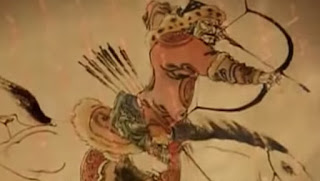
Mounted Horse Archers

2) Mongol/Tartar Army:
For two centuries (1206-1405 AD), from Mongol Genghis Khan to Tartar Tamerlane (Taimur), Mongol/Tartar army dominated and conquered most of the Eurasian landmass and created the largest empire in human history. Their rapid mobility of mounted horse archers and cavalry was part of his major strength that no other force on the planet earth could wield. Their military achievements were vastly outnumbered by any other nations in terms of conquest. Mongols didn’t much influence the societies/territories which they conquered; instead, they assimilated into their cultures, resulted in losing the durability of their own empire. However, the stupendous fighting force of Mongols made them capable enough to unite all lands from the Pacific Ocean to the Mediterranean Sea. More than half of the Mongol troops primarily composed of light cavalry and horse archers and the rest of the others were heavily armored units. Like Arabian horses, Mongol horses have excellent stamina; able to survive in tough weather conditions with little care and providing excellent mileage. Mongol/Tartar hordes were the most ferocious and fearsome force in entire military history. They appeared from the Mongolian and south Siberian forest steppes and slaughtered 50 million people (from 1206 to 1405 AD) through his conquest. But this is not the only case Tartars did, they also brought up with them a biological weapon that they even not know i.e. Bubonic Plague (Black Death); it spreads from Central Asia to Europe, taken 75 to 200 million lives because Tatars slaughtered the huge population in conquered cities (particularly during the siege of Kaffa in Crimea), facilitated the disease to spread across Europe. If we have taken into account all of their brutality and bloodbath, resulted from their conquest, it surpasses any other nations on the planet earth.
Mongol army invaded the entire Asia (except Arabian Peninsula), Eastern and Central Europe (except The Novgorod Republic ) in which they successfully conquered the entire regions of Mongolia, Central Asia, China, Korea, Iran, Iraq, Afghanistan, Transcaucasia, Southwestern Turkey, Northwestern Pakistan, Southern Siberia and most of the Eastern Europe. However, their invasions failed in South Asia, Southeast Asia, Central Europe, Syria, and Japan despite several incursions.
Tamerlane the Great (Taimur) united the Mongols/Tartars once again, restores all the remnants of former Mongol Empire and created the Tartar (Timurid) Empire which ultimately ruled over half of the known world. But Taimur’s death signifies the end of Mongol’s glory and eventual demise.  


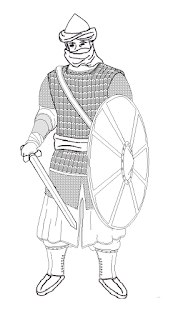
Rashidun Soldier in Military Uniform

1) Rashidun/Arab Army:
Rise of Islam traces went back to history where Rashidun (Rightly Guided) army (632-661 AD) plays an important role in the early establishment and expansion of the caliphate to its largest extent (from the Atlantic Ocean to the borders of China). The early strategy of Rashidun soldiers was to exploit every single weakness of enemies with minimum losses. Despite low-standard army in terms of military equipment and strength as compared to Sassanian Persians and Byzantine Romans, Rashidun force able to defeat both of these two superpowers and conquered the entire Sassanian Persian Empire and 3 quarters of the entire Byzantine Empire. These all accomplishments came as an outcome of their finest strategies by capable commanders such as Khalid Bin Al-Waleed, Abu Ubaidah Ibn Jarrah, Saad Bin Abi Waqas and Amr Ibn Alas, etc, supreme administration of conquered territories by caliphs, and inspiration/motivation came from the Holy Book (Koran) and teachings of the Islamic prophet Muhammad (صلى الله عليه و سلم). In all of the Rashidun Commanders, Khalid bin Al-Waleed was among the most successful commander, under his command Muslims defeated all Bedouin rivals in Arabia and united them under a single political entity called Caliphate. After that, he and his army defeated the numerically superior forces of Byzantine Empire (379,300 & 100,000 Soldiers, according to American historians Treadgold and Walter Emil Kaegi respectively) and Sassanian Empire (100,000 to 130,000 Soldiers, according to recent archaeological evidence on campaign bases near the Great Wall of Gorgan), eventually paved the way for ultimate conquest. Rashidun army used his greatest advantage as strength against both Persians and Romans i.e. Mobility, which latter both these armies didn’t have. Their army was mostly composed of camel mounted soldiers and with the help of light cavalry, they were able to engage and disengage enemy units at any time and attacks from the flank or rear. Their special unit was called Mubarizun (one who gives offer), famously known as champions, an effective force of infantry which demoralizes any enemy force by killing their champions. The total strength of Rashidun soldiers was very few in numbers from 13,000 to 41,000 during the first Caliph Abu Bakr (632-634 AD), but despite all of these facts, they conquered the entire Arabian Peninsula and further went on to clash with two existing superpowers. In all the wars against Byzantine Romans and Sassanian Persians, the Caliphate Mujaheddin faced outnumbered and well-equipped soldiers of Persians and Romans. At one time, they faced the combined power of both Byzantines and Sassanians (ten times greater than Muslims) at the Battle of Firaz (634).
In history, no one’s army created such influence like Rashidun/Orthodox Caliphate’s army created as a result of their military achievements. They brought up Islam into the entire regions of the Middle East, Northern Africa and parts of Central and South Asia in a manner of just two decades. Later on, all Persian, Turkic, Mongol, and Berber dynasties fell under their influence and adopted Islam (as well as their state religion) and carried the Islamic legacy up to the 20th century. Rashidun Caliphate was a precursor to the next Arab caliphates such as Omayyad (661-750 AD) and Abbasid (750-1258 AD). This Orthodox Caliphate left lasting footprints on the Islamic World and their Soldiers (Mujaheddin) provides the central role (along with just and wise administration of their Caliphs) for altering the landscapes of the entire earth from Northern Africa to Central Asia. 

Thursday, November 21, 2019

Timur (Tamerlane), the Iron Man


Unfortunately, History has been much distorted by many historians and still very least and almost none knows exactly about the greatest conqueror of all time. If you are lived in Europe, you probably think about Alexander the Great and if you are lived in Asia, you probably think about Genghis Khan. But actually, Truth is far different than most people expected. Same as many people do not know precisely about the greatest military commander, military campaigner, and warlord in history.

"There is only one God (Allah) in the sky (Universe), and there should be only one king on the earth, the whole world does not deserve to have more than one king". (Timur)Forensic Characteristics of Timur


Timur "Iron" (known in the West as Tamerlane, which derives from the Persian word "Taimur the Lame", pejorative term) was Turko-Mongol ruler, founder of the Timurid Empire and its dynasty. He is undoubtedly the greatest military campaigner, military commander, warlord, and conqueror of all timeThis is the actual fact, we are going to share with you right now and unveiled the truth which has never been fully described before or even in today's era. We explained one by one all of its features as a Conqueror, Military Commander, Military Campaigner, and Warlord to distinguish his undisputed positions on top of every competitor.

Map Showing Timur's Conquest from China to Turkey and from Russia to India

Conqueror: Without any shadow of a doubt, Timur is the greatest conqueror of all time. His colossal conquest dwarfs every other conqueror. Due to his iron will and sheer strategies, he conquered the entire landmass of Eurasia from Moscow to Delhi and from Damascus to Turpan. 

Unlike Genghis Khan, Timur wasn't relied on his generals to conquer the empires; he almost personally led his military campaigns against enemies wherever he went. As a conqueror, he conquered lands more than anyone else in history; his extraordinary conquest (17,000,000 km2) included the entire regions of Central Asia (Kazakhstan, Uzbekistan, Turkmenistan, Tajikistan), Transcaucasia (Georgia, Armenia, Azerbaijan), Mogulistan/Xinjiang (Western China), Modern day entire countries of Afghanistan, Pakistan, Iran, Iraq, Syria, Lebanon, Kuwait, Israel (except Southern parts), Turkey (except Byzantine Pontus), Northwestern parts of India, parts of Western Mongolia and Eastern Ukraine and much of Russia (Southern regions of entire European Russia and much of Western Siberia).

On the contrary, Genghis Khan didn’t personally conquer every state/empire that brought into his massive empire, even he not fully conquered the Jin and Khwarezmian Empire; his son and successor Ogedei completed the entire conquest of both Jin and the Khwarezmian Empire after his death. Even his huge Mongol Empire (12,000,000 km2), in which more than half of his territory was annexed/occupied by his son Jochi (Siberian lands) and two most formidable commanders Subutai (lands of the Cuman-Kipchak Confederation around Kazakhstan) and Jebe (Land of Kara Khatai Khanate in Sinkiang, Western China). Genghis Khan sent his son Jochi to conquer the forest people of Siberia (2,000,000 km2) in 1207 AC, he annexed the entire region up to the Tuva, all tribes were submitted with little resistance except Yenisei Kyrgyz and far eastern regions of Siberia (800,000 km2around the Pacific Ocean were probably conquered by either Jochi or Subutai as part of the Mongol Empire's expansion and Subutai under the orders of Genghis Khan invaded Central Kazakhstan (1217-1220) to defeat the Merkits and their Cuman-Kapchak allies, he occupied the entire area up to the Caspian Sea (2,200,000 km2) in Western Kazakhstan and in 1218 Jebe invaded and conquered the entire domain of Kara-Khitan Khanate (1,500,000 km2) up to the region of Lake Balkhash in eastern KazakhstanLike Timur; Cyrus the Great, Alexander the Great, Attila the Hun, Mahmud of Ghazni, and Nader Shah of Persia were also personally led his military campaigns wherever they went but their conquests have no match with Timur. They all conquered lands around 4 to 5.5 million km2.

Timur's Statue in Tashkent, Uzbekistan

Military Commander: Timur remained undefeated in his entire military career that covers more than four decades (1360-1405 AD) despite facing constant wars, in which he fought at least two hundred battles, conquered much of Asia, Eastern Europe, and overwhelmed all his rivals in Asia (except Ming China), Africa, and Europe. 

Timur and his army defeated and subdued all of his opponents in the world (Grand Duchy of Lithuania, Ottoman Empire of Turkey, Mamluke Empire of Egypt, Delhi Sultanate of India, Crusaders/Knight Hospitallers of Smyrna (Izmir, Turkey), Kingdom of Georgia and all the remnants of the former Mongol Empire i.e. Chagatai Khanate of Central Asia, Yuan khanate of Mongolia, Il-khanate of Persia, Golden Horde khanate of Russia). Only the Ming Empire of China survived because Timur died from fever while he was on his way to conquer the last great empire that stood in his way of complete world domination. From the coldest regions of Siberia to the hottest regions of India and from the scorching heat of the deserts of Iraq to the lacerating cold weathers of Georgia or the notorious mountains of Hindu Kush regions of Afghanistan, whatever the conditions will be, Timur remained unstoppable and unchecked by any military or any obstacles. Siege of Birtvisi and Smyrna (1403), Battle of Ankara (1402), Siege of Aleppo and Damascus (1400), Battle of Delhi (1398), Battle of Terek River (1395), Battle of Kondurcha River (1390), Siege of Tbilisi (1386), Siege of Urganj (1380), Battle of Balkh (1370) was the sign of his strategic and tactical victories.

No doubt Alexander the Great, Khalid bin Al-Waleed, Subutai, Alexander Suvorov, and Napoleon Bonaparte were great commanders but their victories in terms of countable battles and their influence or conquest are far lesser than Timur. For example, Khalid bin Al-Waleed, Subutai, and Alexander Suvorov remained undefeated in 100, 65, and 63 battles respectively. Alexander the Great fought in between 25 to 50 battles (both minor skirmishes and major battles plus sieges) to remain undefeated. Napoleon Bonaparte fought 60 battles and losing 8 (generally at the end of his military career). On the contrary, Tamerlane (Timur) managed to remain undefeated in more than at least two hundred battles plus his conquest outstretched any other opponents and his influence reaches from Spain to China as a result of their military achievements.   


Timur's military campaign against Golden Horde (1390-1396)

Military Campaigner: From 1370 to 1405 CE, Emir Timur constantly involves in far-flung military campaigns spreading from Israel to China and from Russia to India is a testimony to his marvelous feat of accomplishment, enduring every single obstacle.

On many occasions, Timur personally commands his troops to cover thousands of miles away from his capital at Samarkand to meet their enemies in battle. For example like in the battle of Kundurcha River (1390) in which he defeated Tokhtamysh, khan of the Golden Horde and penetrated far deeper into the Siberian lands for more than 700 miles of the uninhabited region then west about 1000 miles, advancing in a front more than 10 miles wide and met the forces of Tartar Golden Horde and defeated them. Second, during the battle of Terek River, he once again traveled far deeper into the Russian land and reaches Ukraine. In a manner of just more than five years (1390-1396), Timur launches two major military campaigns into the coldest inhabitant regions of the earth (Siberia and European Russia) and also into one of the coldest and toughest mountainous regions of the earth (Caucasus), in which he successfully conquered parts of western Siberia, European Russia, Ukraine, and the Caucasus, defeated/subdued all rivals in their path i.e. Tatar Golden Horde, Italian colonies of Genoese and Venetians, Spanish colonies of Catalans and Biscay, Volga Bulgars, Russian Principalities of Moscow and Ryazan, Caucasian states of Georgia and Armenia and cover thousands of miles to achieve all this glory. Especially his last military campaign was extraordinarily successful in which he covered 10 million km2 distance from Samarkand to the Mediterranean Sea and vice versa (including his Zigzag movements as well) to defeat all rivals in their track; Georgians, Armenians, Crusaders, Ottoman Turks, Egyptian Mumlukes, and Arabs in just more than four years of his military campaign (1399-1404). In History, no one's army or his commander able to achieve these feats without losing any of his pitched battles and conquered huge chunks of an area in a course of a just few years. Only Subutai rival Timur in that sense because of his 20 major campaigns brought enormous success for Mongols without losing any of his single battles and overran or conquered Northern China, Central Asia, Eastern, and Central Europe. But even his extensive campaigns unable to surpass the behemoth conquest and unstoppable far-flung military campaigns of Timur the Great. Timur's conquest/military campaigns extended from the Ming Great Wall (Jiayu Pass, China) in the east to the Dome of the Rock (Jerusalem, Israel) in the west and from the Church of all Saints (Moscow, Russia) in the north to the Qutub Minar (Delhi, India) in the south and left no great powers except Ming China which survived because of Timur's death while he was on his way towards his final task.   

Timur's Statue in Samarkand, Uzbekistan

Warlord: Emir Timur was the son of a small tribal chieftain in Transoxiana, who owned the little town called Kesh, near to Samarkand; Timur started his empire from scratch to rule over half of the known world. 

Timur is the only warlord in human history who nearly reached the point of world domination. This unbeaten warlord has beaten everyone in his era, wherever he went. Every best nation and every best army (except Chinese) of his time, crumble down upon itself one by one like a house of cards; Arabs, Iranians, Turks, Mongols, Tartars, Indians, Egyptians, Russians, Italians, Spanish, Georgians, Armenians, and even Crusaders (comprised of Western European countries). With enormous and countless vassals and tributaries around the Old World (Afro-Eurasia), his empire reached its greatest territorial extent before his death in 1405, he ruled over entire Central Asia (Kazakhstan, Uzbekistan, Turkmenistan, Tajikistan), Persia (Iran), Mesopotamia (Iraq, Kuwait), Levant (Syria, Jordan, Lebanon, Israel, Palestine), Egypt, Northern Libya, Northern Sudan, Hejaz in Saudi Arabia, Afghanistan, Pakistan, Northwestern parts of China (Xinjiang, Inner Mongolia & parts of Northern Tibet), Northern India and most of Russia (Central & Southern parts of European Russia, parts of Southwest, Southeast & Central Siberia), Ukraine, Serbia, Croatia, Albania, Bulgaria, Northern Greece, Asia Minor (Turkey), and Mongolia. Eventually stretching from the Pacific Ocean in the east to the Adriatic Sea in the west and from the Arctic Ocean in the north to the Arabian Sea in the south (16.7% total landmass of the entire earth) and created one of the largest empires of all time. His empire covered 25,000,000 kmlandmass of the entire earth. He died in Otrar, Kazakhstan on February 17, 1405, while he was on his way to knock out the red dragon (Ming Chinese) to assert his position as an undisputed greatest ruler of all time.   


Wednesday, October 23, 2019

Top 10 Greatest Military Commanders in History

History is an open witness to numerous successful military commanders from the time of first commander and empire builder Sargon the Great of Akkad until now, in which some plays a decisive role in the early formation of new massive empires such as Timur of Timurid Empire, Khalid bin al-Waleed of Rashidun Caliphate, and Subutai of Mongol Empire. 
Based on Criteria, 5 major points need to be noted while being considered one of the greatest military commanders in history.
1) As Commander-in-Chief of his army, the commander should be considered as undefeated in his long military career.
2) How much he acquired military victories particularly those victories worth counted, which was a turning point in history.
3) How much they facilitated his empire through his military skills to expand or influence his empire towards other lands (Enemy Territories).
4) General must be able to defeat his numerically superior forces of enemies with fewer troops and least resources, despite facing a tough environment/terrain.
5) How many great empires were taken out or subdued by the military commanders.

In light of all those above aspects, we did both Qualitative and Quantitative measurements upon every Military Commander, then come to a final conclusion that who were included in the top of the list respectively.


Portrait of Nader Shah

10) Nader Shah:

Nader Shah Afshar Qoli Baig (1688-1747 AD) was one of the most powerful kings of Persia (1736-1747). He was a military genius as it was proved through his several campaigns throughout the Middle East, Caucasus, Central Asia, and South Asia. He is sometimes called by historians as Alexander or Napoleon of Persia because of his excellent generalship and vast conquest. His famous battles were Herat, Mihmandust, Murche-Khort, Kirkuk, Yeghevard, Khyber Pass, Karnal and Kar which show his tactical and strategic marvels. He modeled Timur and Genghis Khan and invoked their legacies into his conquest. He was assassinated in 1747 AD.


Gustavus Adolphus on the back of horse

9) Gustavus Adolphus:

Gustavus Adolphus the Great (1594-1632 AD) was the king of Sweden; made Sweden a global power. He led Swedish supremacy during thirty years of war in which Sweden rise as a dominant power in Europe. He is often regarded as one of the greatest military commanders of all time, with innovative use of combined arms. His most notable victory would occur in the Battle of Breitenfeld (1631). Almost all military scholars agreed that he was an extremely able military commander in history. His innovative tactical integration of infantry, cavalry, logistics, particularly the use of artillery, earns him the title "Father of Modern Warfare". His advancement in military science made Sweden the dominant Baltic power for the next one hundred years. Both Napoleon Bonaparte and Carl Von Clausewitz regarded him as one of the greatest generals of all time. He was killed in the Battle of Lutzen (November 6, 1632).  


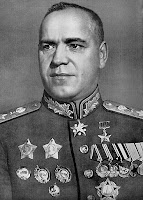
Portrait of Georgy Zhukov

8) Georgy Zhukov:

Georgy Konstantinovich Zhukov (1896-1974 AD) was a Soviet general and marshal of the Soviet Union. Under his command Soviets gain the most decisive victories during World War II. Born into a poor peasant family from Central Russia, Zhukov was conscripted into the Imperial Russian Army and fought in World War I. Afterward, he served in the Red Army during the Russian Civil War. In 1939, he won a decisive battle against the Japanese forces at Khalkhin Gol, for which he won the first of his four Hero of the Soviet Union awards. Especially under his command, the Soviets won a victory at the Battle of Stalingrad which is generally considered as a turning point in the history of World War II. He also defeated the Germans at the Battle of Berlin (1945) and ended the war in Europe. He died from a stroke on June 18, 1974.


Bust of Hannibal Barca

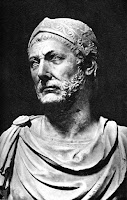
7) Hannibal Barca:

Hannibal Barca (247-183 BC), Carthaginian general who is widely considered as one of the greatest military commanders in history. After the defeat of his father, Hamilcar Barca in the First Punic War (264-241 BC), the Hannibal Barca pledge to his father that never to be a friend of Rome. The Second Punic War broke out in 218 BC after the Hannibal attack on Hispaniola (Spain). From that point, he made his famous military feat in history by carried war elephants to Italy as he crossed the Alps. Just in a few years, he won several victories over Rome. Hannibal Barca could distinguish his enemy's strengths and weaknesses and plans accordingly. His well-planned strategies allow him to conquer several allied Italian cities and established his rule over southern Italy for 15 years. But he unable to take Rome as Fabius Maximus avoided confrontation with him; instead, he was waging a war of attrition. On the other hand, the counter-invasion of Scipio Africanus forced him to return to Carthage and finally defeated at the Battle of Zama. Theodore Ayrault Dodge, an American military historian regarded him as “Father of Strategy”. Romans adopted many of his military tactics. The most brilliant part of his military career was despite his least resources and inexperience troops he still capable enough to defeat the numerically superior forces of the Roman Republic and became a terror of Rome. He died in 184 BC. 


Portrait of Napoleon Bonaparte

6) Napoleon Bonaparte:

Napoleon Bonaparte (1769-1821) was a leader of the First French Empire who rose to power during the French Revolution and led successful campaigns during the French Revolutionary Wars. Napoleon dominated continental Europe for more than a decade and greatly influenced global affairs during the Napoleonic Wars. He won most of his wars and the majority of his battles, building a large empire in Europe before its final collapse in 1815. Battle of Pyramids (1798), Battle of Marengo (1800), Battle of Austerlitz (1805), Battle of Jena-Auerstadt (1806), Battle of Borodino (1812) was undoubtedly one of the great victories of Napoleon and made him one of the greatest military commanders in history. He died in 1821 AD.


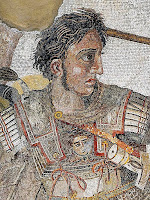
Portrait of Alexander the Great, facing the Persians at the Battle of Gaugamela (331 BC)

5) Alexander the Great:

Alexander III of Macedon (356 BC – 323 BC), famously known as Alexander the Great, a member of the Argead dynasty and king of the ancient kingdom of Macedon. He was born in Pella in 356 BC and succeeded his father Philip II at the age of 20. He ruled for 13 years and created one of the largest ancient empires in history stretching from Greece to northwestern India. He is widely considered as an undefeated military commander. In 334 BC, he invaded the Persian Empire (Achaemenids) and began a series of military campaigns that lasted for 10 years and ended up with complete conquest. Finally, he collided with the Indians at the battle of Hydaspes. After a titanic struggle between Alexander and Porus, Alexander emerged victorious (According to the Greek Historians). After years of war, the Greek army completely exhausted and demanded from Alexander to stop his advancement, the possibility of facing a more terrible and dangerous enemy in northern India (Nanda Empire of Magadha). His six most famous battles in history (Chaeronea in 338, Granicus in 334, Issus in 333, Gaugamela in 331, the Persian Gates in 330, and Hydaspes in 326) are a testimony to his magnificent strategies and military tactics. He died in 323 BC possibly from poison.


Portrait of Alexander Suvorov

4) Alexander Suvorov:

Alexander Suvorov (1730-1800 AD) was a Russian military commander and its national hero. He joined the Imperial Russian Czar Army at the age of 17. In his long military career of five decades he fought Seven Years War, War of the Bar confederation, First Russo-Turkish War, Kuban-Nogai Uprising, Second Russo-Turkish War, Kosciuszko Uprising, War of the Second Coalition in which he emerged undefeated in all of his wars. Due to his exceptional combat skills and leadership, he defeated his superior enemy forces. Suvorov won 63 major battles and never lost a single one while he was seriously wounded six times during his military career. Suvorov utilized aimed fire instead of repeated barrages from line infantry and applied light infantrymen as skirmishers and sharpshooters. He used a variety of army sizes and types of formations against different foes: squares against the Turks, lines against the Poles, and columns against the French. His guiding principle was to detect the weakest point of opponents and focus a devastating attack upon that area. He sends his units in small groups as they arrived on the battlefield to sustain momentum. In most cases, Suvorov was always located in the most exposed position on the battlefield because he wanted to share the same risks and discomforts as the others. He even defeated the French army of Napoleon Bonaparte during his Italian campaign in 1799-1800 and recovered all of his lands which had previously captured by Napoleon and defeated their top generals (Moreau at Cassano d’Adda, MacDonald at Trebbia and Joubert at Novi). He died in Saint Petersburg, Russian Empire (1800 AD) from illness. 

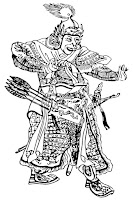
Drawing show the Subutai

3) Subutai:

Subutai (1175-1248 AD), the most famous general of Genghis Khan, founder of the Mongol Empire. Under his command, Mongol hordes overran or conquered Northern China (1207, 1209, 1211-1215, 1226-1227, 1231-1235), Kazakhstan (1217-1220 AD), Eastern and Central Europe (1236-1240, 1241-1242 AD), defeating 32 nations and won all his 65 pitched battles in a manner of more than 20 campaigns and remained undefeated in all battles. He gained victory by employing imaginative and sophisticated strategies and routinely coordinated movements of armies that were hundreds of kilometers away from each other. During his invasion of China, Russia and Europe, Subutai routinely coordinated armies of 100,000 men across frontages separated by 500-1000 kilometers and divided into three to five individual groups. These maneuvers were highly synchronized despite the huge distances. Subutai died in 1248 AD around Tuul River, Mongolia.


Khalid bin Al-Waleed besieged the castle of Damascus (634 AD)

2) Khalid bin Al-Waleed:

Khalid bin Al-Waleed (592-642 AD), known as Sword of Allah, was a companion of the Islamic prophet Muhammad (صلى الله عليه و سلم). Under his military command, Muslims conquered the entire Arabian Peninsula and united under a single political entity called Rashidun Caliphate. He expanded the Rashidun Caliphate to embrace much of Mesopotamia and Levant. Furthermore, he remained undefeated in more than 100 battles against numerically superior and well-equipped forces of Byzantine Roman Empire and Sassanian Persian Empire, even in Ridda Wars against Arab tribes on Arabian Peninsula. 
After Hannibal Barca, Khalid bin Al-Waleed was the first-ever military commander who perfectly executed the pincer movement against a large army. In entire military history, Khalid bin Al-Waleed was the only general who consecutively defeated two superpowers at a single military engagement (Battle of Firaz, 634 AD). He is also remembered for his decisive victories at Yammah, Ullais, Firaz, and his tactical marvels, at the Wajala and Yarmouk. He is no doubt one of the finest military commanders of all time. Khalid died in Homs, Syria in 642 AD. 


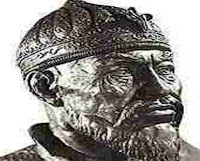
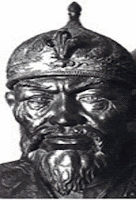
Bust of Timur the Great

1) Timur the Great:

Timur the Great (1336-1405 AD), known in the West as Tamerlane (also spelled as Taimur), founder of the Timurid Empire and Timurid dynasty in Central Asia. Born in Kesh, 50 miles south of Samarkand, modern-day Uzbekistan. Timur remained undefeated in his entire military career that spanned 41/2 decades (1360-1405 AD) despite facing constant wars, in which he fought at least two hundred battles and conquered most of the Asia and Eastern Europe. Even above all of these accomplishments, Timur and his army defeated and subdued all of his rivals in the world except the Ming Empire of China because Timur died from fever while he was on his way to complete his final task. Timur forged the greatest and largest empire ever created in the life of one man. From the lacerating cold weathers of the Siberian regions to the hottest regions of India and from the scorching heat of the deserts of Iraq to the notorious mountains of the Hindu Kush (Afghanistan) and Caucasus regions, no matter what circumstances, Timur remained unstoppable. Siege of Balkh (1370), Siege of Urganj (1380), Siege of Tbilisi (1386), Battle of Kondurcha River (1390), Battle of Terek River (1395), Battle of Delhi (1398), Siege of Aleppo and Damascus (1400), Battle of Ankara (1402) and Siege of Smyrna & Birtvisi (1403) were the signs of his strategic and tactical victories. He died on 17th February 1405 at Otrar in Kazakhstan while he was the mightiest ruler of half of the known world.